Your:
Presence of Attention – Objectifies Coordination
Patience –Sustains Focus
Impartial Scrutiny –is Creative Liberation
Vivid Aural-Imagination – Defines the Absolute Present
– JC Heisler

Your:
Presence of Attention – Objectifies Coordination
Patience –Sustains Focus
Impartial Scrutiny –is Creative Liberation
Vivid Aural-Imagination – Defines the Absolute Present
– JC Heisler

We learn how to speak before we can read or write.
“Students” need to know from the very beginning, they are talented musicians and artists. Their sound is valuable, unique, and cherished right away. Their sound is the music from the very beginning.
The skill of speech develops through our first 18 months of life by hearing and imitating. As infants, we learn how to listen and what to listen for.
We begin to learn the process of writing one letter at a time between the ages of 3 and 6. This begins the very sophisticated and abstract processes of translation and phonation of written letter symbols.
As we begin the processes of reading and writing sentences between the ages of 5 and 8 we may learn to write a word, then two words, then three, and so on.
It takes a definitive 7 years for these skills of literacy to develop as the coordination of independent competency develops; where we are able to participate freely and confidently, of our own volition, with great pride in our ability to perform the basic skills of reading, writing, and speaking.
This is a seven year process that coordinates the necessary skills of literacy, serving our independent day to day creation, expression, and experience.
Beginner 4th and 5th grade instrumentalists are in their infancy of literacy; a sacred and magical time that should be cultivated, nurtured, and cherished for at least 2 years through positive and creative development in service of their individuality and the discovery of their own unique voice through creation, imitation, experience, coordination, and competency of musical literacy skills.
“Formal”concerts can wait; performance should reflect a folk community “show and tell” celebration.
speak, write, read, write, speak
– JC Heisler

The body must only respond to the stimuli of the imagination’s ear.
The depth of intent and clarity of expression solely depend on one’s ability to respond to the solitary stimulus that actually matters; the creation and manifestation of music from within, before any note is ever played.
Therefore developing the imagination’s ear through refining the skills of musicianship is the artist’s truest, urgent, and most necessary work. It is in this way that technique is coordinated and maintained, freeing aesthetic to imbue.
– JC Heisler
One cannot rehearse tradition; one observes and LIVES a tradition…or not.
Tradition fashions by consequence of its boundaries, extolling awareness upon one’s unique personhood in THIS specific time and space.
To CREATE is an indictment, to DARE to DECIDE.
It is not to cajole, try, convince, preserve, nor replicate.
NO ONE, can stand in for you.
– JC Heisler
Trumpet Diatonics© orders technical advancement, while maintaining a prodigious emphasis on developing a clear aural literacy.
Heutagogy is a learner-centered educational thesis rooted in key principles of learner agency, self-efficacy, capability, metacognition (knowing how to learn), and reflection.
Learners are interdependent. They identify the potential to learn from phenomenal sense experiences as a matter of course, and they are capable of managing their own inspirations and curiosities through autonomous learning.
The guide (“teacher”) provides exceptional and deliberate resources and experiences that incite and empower the learner to engage through courses of action inspired by their own personal curiosities while fulfilling their unique inclinations for the learning.
Learning is not necessarily planned or linear.
Learning is based on the identification of the potential to learn in specific and meaningful situations relevant to the learner’s present skills, talents, capabilities, and facility to concentrate.
Learners can go beyond problem solving through Creative Pro-Activity rooted in the freedom of Confident Self-Efficacy through the realization of their own learning coherencies in the Creation of Artifacts.
Learners must exhibit an independent intelligence and aptitude for musical study and performance, exhibiting profound personal interest, there by exercising a responsible daily pursuit devoted to actualizing artifactual creation.
A Community of Excellence in Musical Expression
1. Experience the Flow of Musical Intention as We Practice Together
2. Learn Awareness through Musical Performance and Composition
3. Share and Create a Communal Repertoire
Artists in The Studio have continued their musical instruction in their acceptance to the following institutions.
Indiana University Jacobs School of Music
University of Cincinnati College Conservatory of Music
Cleveland Institute of Music
Frost School of Music University of Miami
Ohio University School of Music
The Ohio State University School of Music
Miami University College of Creative Arts
Xavier University Department of Music
Denison University
Otterbein University
University of Michigan School of Music
1. Can you hear your own music in your own imagination with your own musical ideals?
2. Has this musical encounter exposed your own unsolved technical difficulties and challenges?
3. Do you lack clarity and literacy of this musical situation?
4. Is your presumptuous ego preventing you from being honest with yourself?
5. Do you fear not being able to do that which you have not been able to understand?
6. Have you spent enough time training accurately and consistently?
7. Are you impatient? Are you distrustful? Do you lack conviction?
8. Is your ability to hear lacking because you are not listening in order to hear? Is this is preventing you from meaning and clarity?
9. Do you understand these problems are opportunities to develop and refine your own artistic curiosities and aesthetic?
10. Is your conviction to define your work and perform something you believe in?
– JC Heisler
You can only give, what you have.
You are not the music; the music is, The Music.
You have to be made in the music, to share through the music.
I know nothing extra of what I might offer, that equals the experience of what only music can give.
– JC Heisler
“Nothing touches a work of art so little as words of criticism: they always result in more or less fortunate misunderstandings. Things aren’t all so tangible and sayable as people would usually have us believe…
You ask whether your verses are any good….
You are looking outside, and that is what you should most avoid…No one can advise or help you – no one.
There is only one thing you should do. Go into yourself. Find out the reason that commands you to write; see whether it has spread its roots into the very depths of your heart…
This most of all: ask yourself in the most silent hour of your night: must I write?
And if this answer rings out in assent, if you meet this solemn question with a strong, simple “I must” then build your life in accordance with this necessity; your whole life, even into its humblest and most indifferent hour, must become a sign and witness to this impulse. Then come close to Nature.
If your everyday life seems poor, don’t blame it; blame yourself; admit to yourself that you are not enough of a poet to call forth its riches; because for the creator there is no poverty and no poor, indifferent place.
And if out of, this turning within, out of this immersion in your own world, poems come, then you will not think of asking anyone whether they are good or not.
…for you will see them as your dear natural possession, a piece of your life, a voice from it. A work of art is good if it has arisen out of necessity.
That is the only way one can judge it.
So, dear Sir, I can’t give you any advice but this: to go into yourself and see how deep the place is from which your life flows; at its source you will find the answer to, the question of whether you must create.
Accept that answer, just as it is given to you, without trying to interpret it. Perhaps you will discover that you are called to be an artist. Then take that destiny upon yourself, and bear it, its burden and its greatness, without ever asking what reward might come from outside.”
– Rilke: ‘Letters to a Young Poet’

A “teacher” must be Humble and Articulate enough to be re-made in the Present Moment of the Art Form.
98% of teaching is waiting, patiently…
…to observe when, how, and why the student becomes socially, emotionally, and psychologically self aware within “This Present Moment of the Art Form”.
You will know what to say when you decide to Be Quiet.
– JC Heisler

An essential aim of Education is to provide the pupil with the freedom and safety to process mistakes and misunderstandings without shame.
The teacher’s role (in so much as teaching can be practiced) is to share a wholehearted “living experience” (as opposed to inert information) with the pupil so as to guide, encourage, and clarify the processes of self education, without fear.
The pupil’s fundamental experience must be rooted in a pure discipline that fosters and emphasizes a robust autonomy exercised through the instinctual skills of observation, organization, and inference; in acceptance and awareness of their own developing thoughts, curiosities, feelings, skills, and manifestations in the making of artifacts; in cooperation to the Good Service of their many Life Relationships.
– JC Heisler
An outstanding teacher has a thorough and rigid understanding of their discipline and practices teaching from a desire to serve unconditionally.
An outstanding teacher is devoted to continual refinement of their own skills, abilities, and aesthetic.
An outstanding teacher is serious, fair, honest, and consistent, with a commitment of joy to guide pupils to a relationship with that which is True, Good, and Beautiful.
An outstanding teacher shares a “living educational experience” (as opposed to inert information) with the pupil so as to guide, encourage, and clarify the processes of self education.
The pupil’s fundamental experience must be rooted in a pure discipline that fosters and emphasizes an autonomy exercised through a robust relationship within a Living Heritage, which in turn refines and informs observation, organization, inference, skill, and action.
An outstanding teacher affords the pupil to grow in awareness of their own developing thoughts, curiosities, understandings, and skills, through the making of artifacts within a clearly defined heritage in cooperation to the Good Service of their many Life Relationships.
An outstanding teacher is humble and articulate enough to share in the many processes of learning.
I aim to address the wide range of skills and abilities with gratitude, and patience. This mighty challenge of serving every single pupil unconditionally with clear expectations is the creative joyful work and fulfillment of teaching. To celebrate personal achievement while being adherent to the discipline of excellence requires perseverance, fortitude, courage, understanding, and grace. It is imperative for the teacher to clearly lead and properly coordinate continual communication between pupil, peers, parents, and faculty alike.
My Oath…
Declares a devotion of gratitude with patient attention:
to observe, learn of, and celebrate every participants’ individual skills, talents, abilities and unique voice in their creative expression though the art form, music;
to help participants recognize that the beauty within the creative act is experienced through their own disciplined relationship with the heritage and tradition of the art form and is available for a lifetime of joy, perseverance, work, manifestation, and development;
to be sensitive, as this relationship changes over time as the student changes and grows over time;
to model that fulfillment is in the dedicated work of making something worthwhile and beautiful for the benefit of others.
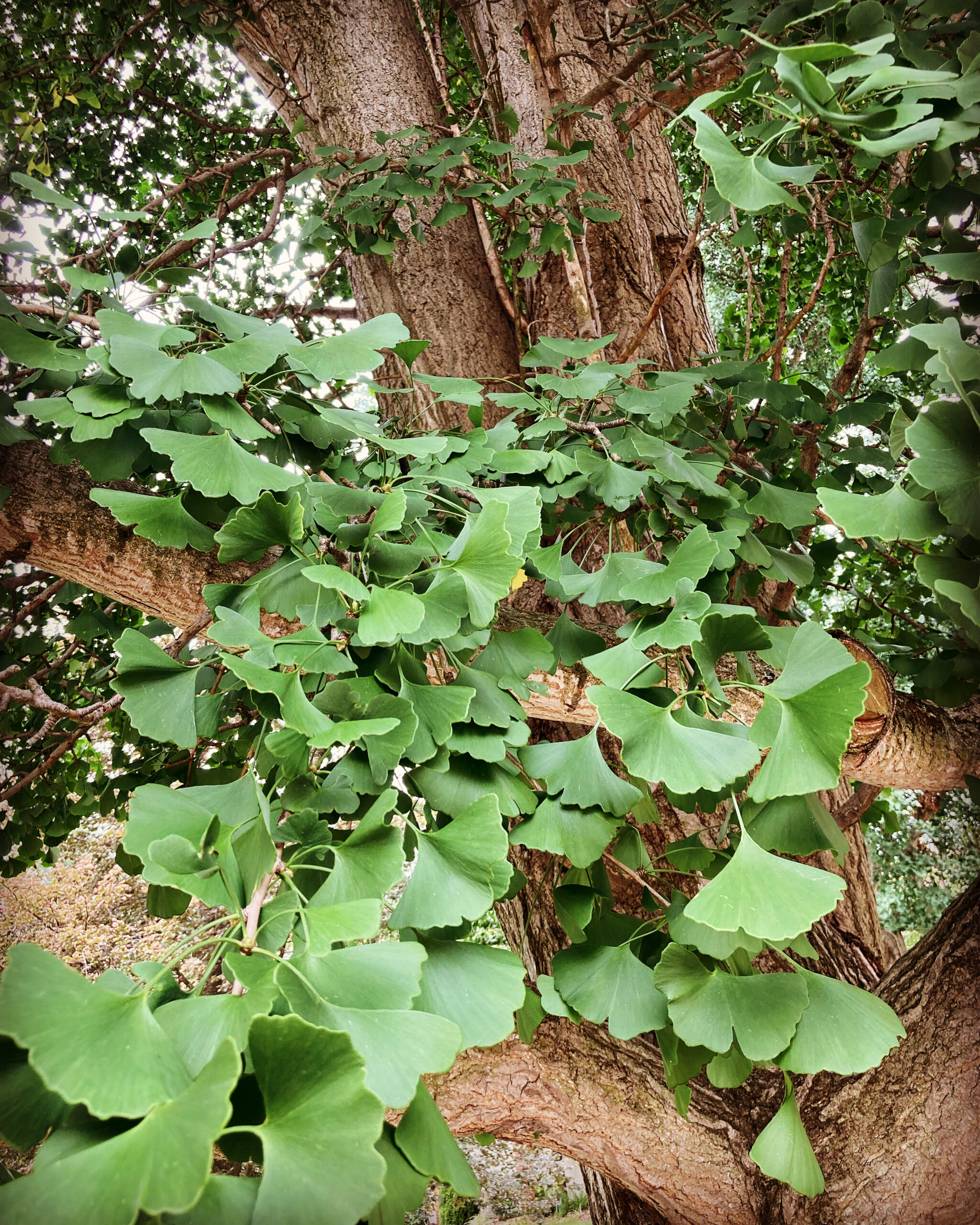
I am interested in aromas and tastes; the harmony of nature and change; old stories and poetry; mobiles and paintings; melodic dance and cadence rhythms.
I vow to be completely arrested by the shared present moment so as to be led by intuition, together.
– JC Heisler
As light waves travel, absorbed and reflected in constant motion, illuminating our perceptions all around us; so too are sound waves moving among us and through us, engaging and affecting our lives in sympathetic resonance.
If we learn to listen, we may be open to hearing with deeper humility, dignity, integrity, clarity, and elegance.
– JC Heisler